Train, Boots, Bus: The Cotswold Weekend That Leaves the Car at Home
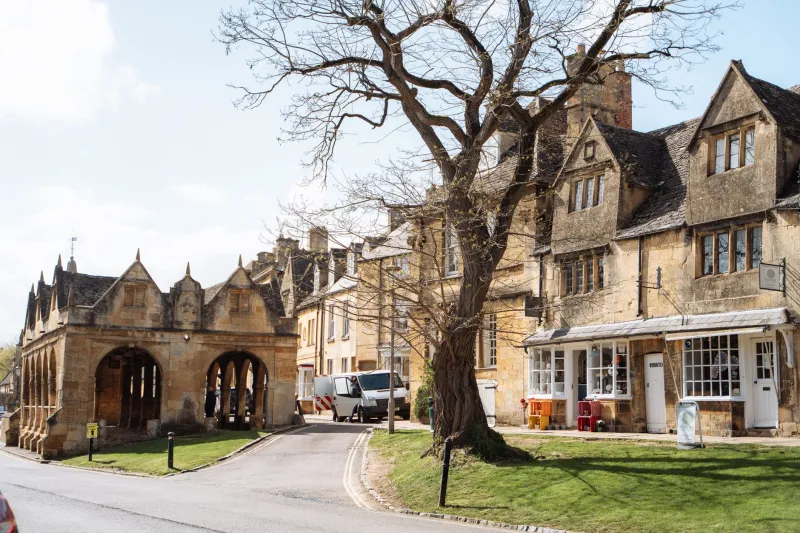
There's a quiet sort of smugness that comes over a Stow local when someone asks where to park. Not because we enjoy your misery in the coach park — we don't, honestly — but because the best weekends here often involve no car at all. Stow sits on a knot of footpaths and lanes, with two railway stations within a short taxi ride and a bus that ambles through the square. Leave the motor on the drive and the weekend gets simpler, cheaper and considerably more pleasant.
This is a practical plan, not a romantic one. It assumes you're arriving by train, staying two nights and want to see more than the inside of a gift shop.
Getting in without a steering wheel
Your two realistic railheads are Kingham and Moreton-in-Marsh, both on the Cotswold line out of London Paddington and both roughly four miles from Stow. Kingham is the smaller and quieter of the two — a proper little country station with a car park and not much else. Moreton has the advantage of being a town, so if your train lands late or you fancy a mooch before heading up the hill, it's the friendlier arrival.
From either station, a taxi into Stow is a short hop — think ten to fifteen minutes — and should cost somewhere in the region of £12–£18 depending on where you're going and how much luggage you've brought. Book it in advance. This is not a place where you stroll out and find a rank of waiting cabs, particularly on a Sunday evening. Save a local firm's number in your phone before you travel and arrange the return leg when you book the outbound one.
The bus is the cheaper option and, on a dry day, the more characterful one. The 801 and its siblings run between Moreton-in-Marsh and Cheltenham via Stow and Bourton-on-the-Water, which makes Moreton the handier station if you're relying on public transport. Timetables change with the seasons and the school terms, so check the current Pulhams Coaches times a week or two before you travel rather than trusting a blog written in 2019. And do check the last bus back — rural evening services are not generous.
Luggage, cobbles and the small print
Stow's streets are old, uneven and unbothered by the wheel. A hard-shell suitcase with tiny wheels is a genuine liability on the square. Pack a soft bag you can carry, or at least one with wheels big enough to cope with flagstones and kerbs.
Neither station has left luggage, and Stow has no locker culture to speak of. If you arrive before check-in, ask your accommodation whether they'll hold bags — most will, and many will let you park a bag in a hallway while you go and find lunch. Failing that, plan to arrive after 3pm and use the morning for a walk rather than a shopping spree.
One more piece of small print: taxis fill up on summer Saturdays and during the Christmas lights weekends. If you're coming in December, book the car before you book the train.
Day one: square, shops and the Slaughters loop
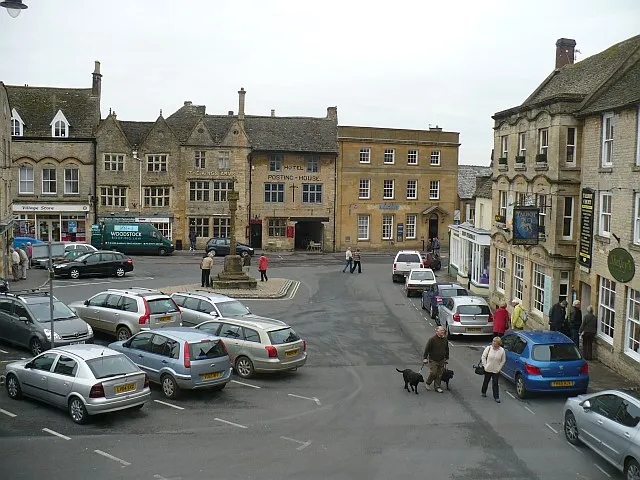
Arrive, dump the bags, and walk into the square. This is the easy bit. Stow's independent shops are clustered tightly enough that you can cover them in an afternoon without breaking stride — coffee, a browse, a bakery stop, maybe something foolish from a vintage shop.
Then put the boots on and head out towards Lower Slaughter. The footpath route is well-trodden, roughly five miles out and back if you keep it simple, and it delivers exactly the sort of honey-stone, water-meadow scenery people come here for. Lower Slaughter's mill and ford are the postcard bit; Upper Slaughter is the quieter sibling and, in my view, the better stop for a drink. There's a pub at the end of it if you time it right, and a bench by the river if you don't.
Back in Stow by late afternoon, you've earned a pint and a plate of something. No driving, no parking, no negotiating a single-track lane with a tractor. This is the whole argument for the car-free weekend in one afternoon.
Day two: a bus, a village and a train home
Sunday is where the car-free plan either shines or falls over, depending on your discipline. The trick is to make the journey home part of the day rather than an afterthought.
Option one: take the bus to Bourton-on-the-Water in the morning, potter about, then walk back to Stow on the footpaths if the weather's kind. The return leg is around four miles and gently uphill at the end, which is a fine way to feel virtuous before lunch.
Option two, and the one I'd choose: walk to Moreton-in-Marsh. It's about five and a half miles on lanes and paths, largely flat once you're off the ridge, and it ends at a station with direct trains back to London. Leave your bag at the accommodation, collect it on the way through, and time the walk so you arrive with twenty minutes to spare. It's the neatest possible end to a car-free weekend: boots on, train caught, no taxi required.
If the weather turns — and in the Cotswolds it can turn between the square and the butcher's — the fallback is a taxi to Moreton or Kingham and a cup of tea in the station café. Nobody will judge you. We've all done it.
The bits that make a car genuinely unnecessary
The honest truth is that Stow is a walking village surrounded by walking villages. The Slaughters, Broadwell, Oddington, Bledington and Bourton are all reachable on foot by rights of way that have been in use for centuries. The pubs are on those paths. The churches are on those paths. The views are on those paths.
A car gets you to Stow faster. It doesn't get you anywhere better once you're here. Bring boots, a rain jacket, a charged phone and a tolerance for timetables, and you'll have the sort of weekend that makes the drive home feel like a step backwards.