Sieges, Stones and Surrender: A Civil War Walk Through Stow
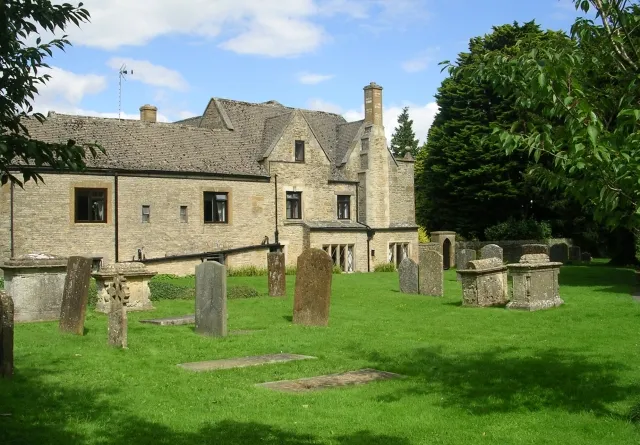
Photo: Betty Longbottom, CC BY-SA 2.0, via Wikimedia Commons
Stow-on-the-Wold looks peaceful in a way that almost feels deliberate. The Square is all honey-coloured stone and careful shopfronts, the churchyard is quiet, and the pubs do a good line in log fires. But walk the same streets with a bit of Civil War history in your head and the town starts to feel different. Not haunted, exactly. More like a place that remembers.
This is a short self-guided walk, maybe a mile and a half if you take your time and double back, and it is best done slowly. It is not a battlefield tour in the grand sense. Stow's Civil War story is written into streets, a churchyard, a few old inns and the names that locals walk past every day without thinking.
Start in the Market Square
Begin by the cross in the Market Square. In the 1640s, Stow was a Royalist garrison town, a place of quarters, supplies and rumour. It was not a grand fortress. It was a market town that found itself on the wrong side of a war that had already been grinding on for years.
The decisive moment came in March 1646. A Royalist force under Sir Jacob Astley was defeated at Stow by Parliamentarian troops. It is often described as the last battle of the First English Civil War, and there is a finality to the story that suits the town. Astley was captured, and his reported words to his captors — that they had done their work and might go play, unless they fell out among themselves — have the weary wit of a man who knew the argument was not really over.
Stand here for a moment and look around. The Square is not the same shape it was then, and the traffic has changed somewhat, but the geography still works. This was the stage for the town's most famous and most unhappy day.
Church Street and the road to the church
Walk up Church Street towards St Edward's Church. On the way, notice how narrow the approach is. This is a town built for carts, not armies, and it helps explain why Stow's war was a matter of occupation, skirmish and surrender rather than sweeping cavalry charges across open fields.
St Edward's is the heart of the walk, but it is also where you need to be most careful. This is not a museum exhibit. It is a working church, and the point of visiting is to understand what happened here, not to use the building as a dramatic backdrop for a photograph.
Local tradition holds that the church was used as a prison for Royalist captives after the battle. Whether every story of graffiti and rough treatment can be proved is another matter; some of it is the kind of history that lives in memory as much as in records. What is certain is that the church has seen far more than baptisms and harvest festivals. Look at the walls, the porch, the worn stone. Ask what it would have felt like to be locked in here in the cold, with the town outside and the war finally closing in.
The churchyard, with respect
The churchyard is the most atmospheric stop on the walk, and the easiest place to get it wrong. Do not climb on walls or tombs. Do not treat the graves as props. If a service is on, wait or come back. If the church is open, go in quietly, and leave a donation if you can. The building is kept open by people who are not running a visitor attraction.
The churchyard also gives you a useful pause. The Civil War was not a clean contest between villains and heroes. It split families, parishes and towns. Stow's Royalist allegiance did not mean every person in the town agreed with it. That is the more interesting story: a community caught in a war it could not control, trying to keep its market, its faith and its people together.
Back down to the old inns
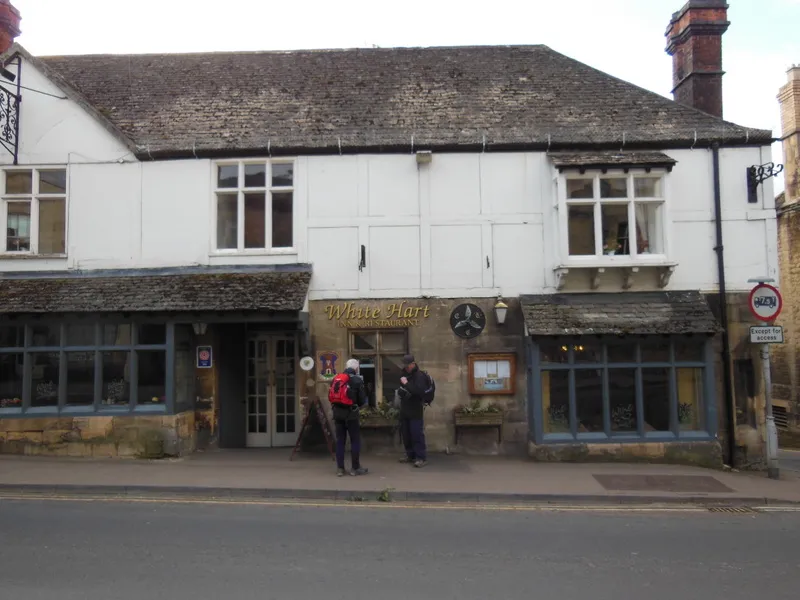
Leave the church and head back towards the Square, then take in the old inns. The Porch House, the King's Arms and the Bell all belong to a town where inns were part of the machinery of local life: places for quartering troops, exchanging news, and spreading the kind of rumours that wars run on.
You do not need to believe every old pub claim about secret passages and hidden Royalists. In fact, a healthy scepticism makes the walk better. What matters is the type of building. These are places built for gathering, and in the 1640s gathering was dangerous. A landlord might hear the wrong thing. A traveller might carry the wrong news. A soldier might drink too much and say too much.
Stop for a half at one of them if the mood takes you. The walk finishes well at a pub, and there is something honest about ending a Civil War history walk with a pint in a building that has outlasted the argument.
Sheep Street and the edge of the story
Finish with a short loop down Sheep Street, then back towards the Square. There is no single plaque that explains everything, and that is part of the point. Stow's Civil War history is not packaged neatly. It is in the church, the street plan, the old inns and the gaps between them.
If you want to do the walk properly in 2026, allow an hour and a half. Wear shoes that can cope with uneven churchyard paths. Check service times before you go into the church. Keep your voice low in the churchyard, and remember that locals use these streets every day. You are a guest in someone's town, not an explorer in a ruin.
A last thought before the pub
The best history walks do not leave you with a list of dates. They leave you looking at ordinary things differently. After this one, the church porch is not just a pretty place to shelter from the rain. The old inns are not just pubs. The Square is not just a place to park and find a coffee.
Stow lost its war, or at least the Royalist cause did. The town carried on. That is the real evidence you are walking through: a place that was occupied, fought over and then quietly got back to being a market town. The stone remembers. The rest of us just have to slow down enough to notice.