Cellar Doors and Shuttered Bars: A Walk Through Stow's Lost Inns
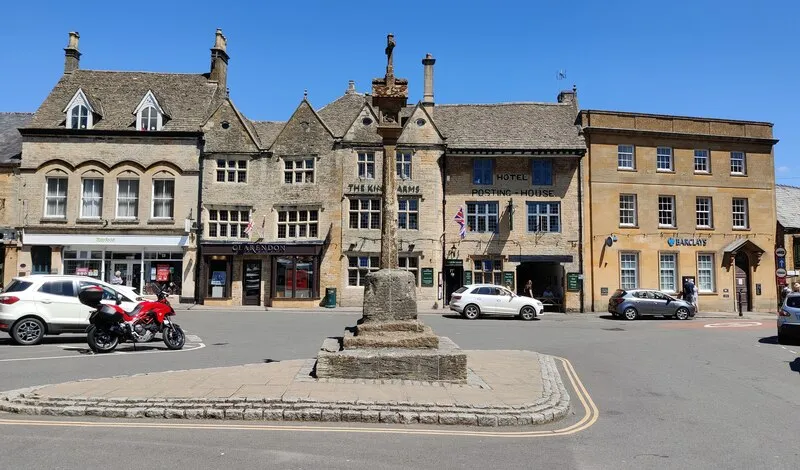
Photo: Mat Fascione , CC BY-SA 2.0, via Wikimedia Commons
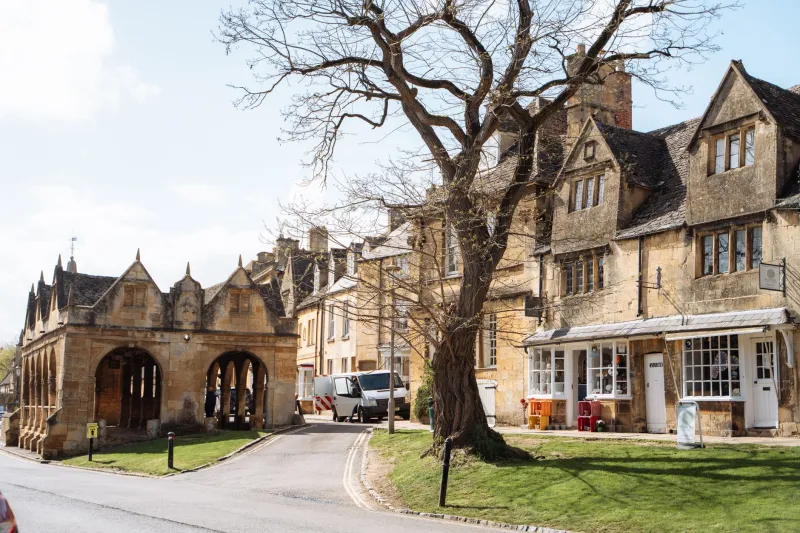
Stow wears its history lightly. The square looks tidy, the shop windows are dressed, and the coaches disgorge their passengers in a steady rhythm. But scratch the surface — or rather, look above the shop signs and down the side entries — and you find a town that once ran on beer as much as wool. Stow had more licensed premises than it knew what to do with, and a surprising number have simply melted back into houses, cafés and holiday lets.
This walk is about two miles, mostly flat, and takes around ninety minutes if you stop to peer at things. It starts on the square and ends near the Bell, so you can reward yourself properly. Bring an old map if you have one; the Ordnance Survey sheets from the late nineteenth century are particularly good at showing inn yards as tight little rectangles behind the street frontage.
Start at the Cross: where the coaches came in
Stand by the market cross and look at the buildings facing you. The King's Arms is the obvious survivor, and its wide arch and yard are a reminder of what a coaching inn actually needed: stabling, a pump, a blacksmith within shouting distance and room for a cart to turn. In the heyday of the turnpike roads, the square was a working yard as much as a public space. Passengers changed horses, luggage was shifted, and the innkeeper's day started long before the first pint was pulled.
Look for the smaller details. A mounting block worn into a curve. A stone threshold that sits a good six inches above the pavement because the road has been made up around it. Iron rings set into walls where a horse could be tied. These are the fingerprints of the old inn trade, and they survive long after the licence has gone.
Local memory has it that several square-fronting houses kept a taproom at the back, serving market-day crowds without ever troubling the guidebooks. You can see why. On a livestock market day, the square would have been loud, mucky and thirsty, and the nearest door with a barrel behind it did a roaring trade.
Sheep Street and the yards behind
Walk up Sheep Street and keep your eyes on the gaps between buildings. Stow's inn yards were not grand courtyards; they were practical, narrow and often shared. Some are now private gardens, some have been swallowed by extensions, and one or two are still open enough to show a cobbled patch and a high back wall.
This is where the coaching story gets interesting. The big inns on the main routes had competition from smaller houses that specialised in a particular trade — carriers' lodgings, a brewery tap, a house that took in commercial travellers and nobody else. A landlord's reputation travelled by word of mouth between drivers, and a good fire and a clean bed could shift a whole route's stopping point.
One oft-repeated tale concerns a landlord who kept a tally of coaches delayed by snow and chalked it above the bar. Whether or not the number was exaggerated after a few drinks, it captures something true: the innkeeper was a logistics man as much as a host, and his living depended on the road being busy.
Digbeth Street and Talbot Court
Turn down Digbeth Street and find Talbot Court. The name alone is the giveaway — a Talbot was a hunting dog, and a favourite inn sign. The entry is narrow enough to feel like a mistake, which is exactly what makes it worth walking through. Yards like this were designed for horses and barrels, not for Instagram.
The beerhouse era left a different mark. After the 1830 Beerhouse Act, ordinary householders could buy a licence to brew and sell beer for a modest fee, and plenty did. These were not grand inns; they were front-room operations with a barrel in the back and a bench outside. Look for doorways that sit awkwardly close to the pavement, or windows that seem too large for a cottage. Sometimes a former beerhouse is hiding in plain sight as a tearoom.
The Porch House nearby claims ancient inn status, and whether or not you believe every line of the marketing, the building's bones are old enough to have seen several trades. That is the thing about Stow: the licences change, the stone stays.
Church Street, Park Street and the temperance shadow
Head towards the church and then down towards Park Street. The further you get from the square, the more the pub story becomes a story about respectability. Temperance sentiment hit Cotswold towns hard in the late nineteenth century, and some houses closed not because they ran out of custom but because the local mood turned against them. Others were bought up, tidied up and turned into private residences with a tellingly wide hallway where the bar once stood.
On Park Street, the Bell is the anchor — a proper pub that has survived by being what people actually want: a fire, a decent pint and no fuss. Use it as your comparison point. The lost pubs were not all victims of some grand historical force; some were simply in the wrong place, too small, or badly run. The ones that remain tend to be the ones that adapted.
Back lanes, brew houses and what the stone tells you
Finish with a loop through the back lanes — Well Lane, Back Walls, the quieter edges where the town's service life used to happen. Brewing needs water, and Stow's wells and pumps were part of the trade. So were drains, and the less said about the smell of a Victorian pub yard in summer, the better.
Look for outbuildings with unusually thick walls and low doors. Some were brewhouses, some were stables, some were both. A blocked doorway at first-floor level can suggest a hoist for sacks or barrels. A patch of different stone can mark where a lean-to was removed. None of this is definitive without documents, but it gives you a way of reading the town that the glossy guides tend to skip.
What the lost pubs actually tell us
Stow's vanished drinking places are a short history of the town's changing job. Once it served the market, the road and the surrounding farms. Then the railway took the coaches away, the motor car took the local trade further afield, and the supermarket took the weekly shop. Pubs that depended on a captive market-day crowd had no answer to any of that.
Now the town serves visitors, and the pressure on buildings is different again. A former inn makes a lovely holiday let, and you cannot blame anyone for that. But it does mean the casual, ordinary drinking places — the ones that were never picturesque — are the easiest to lose. The King's Arms and the Bell survive partly because they are big enough to be destinations. The little beerhouse with a bench outside is the one that disappears without much fuss.
The practical bit
Allow ninety minutes to two hours. The route is flat but the pavements are uneven, and some of the side entries are private property — look, don't loiter. A printed old map is more useful than a phone if the weather turns. Finish at the Bell or the King's Arms and raise a glass to the landlords who kept the fires going when the square was full of sheep and the roads were bad.
And if you find a stone ring in a wall or a doorway that doesn't quite make sense, take a photo. Somebody in Stow will know what it was. That is how the town's history stays alive — not in a museum case, but in the small corrections locals make when a visitor asks the right question.