The Cold Side of the Hill: Reading Stow's Frost Lines on a Winter Walk
Every town has a winter temperament, and Stow's is on the brisk side. You feel it as soon as you come up the hill — the temperature drops a degree, the wind finds a gear, and the light changes from the soft grey of the valleys to something sharper and more metallic. People who move here from Cheltenham or Oxford spend their first winter mildly outraged about it. The rest of us just buy better boots.
What follows isn't a generic winter walking guide. It's how the town actually behaves between November and February — which yards you can hear ice cracking underfoot three days after a freeze, which walls you can lean against in a T-shirt at one in the afternoon, and how to string together a walk that stays sensible when the pavements are glassy.
Why Stow runs cold
Stow does its living on top of a hill, the best part of 800 feet up on the wolds, with the ground falling away on most sides. That has been the town's whole point since the market charter — a high, open, windy place where sheep could be sold and nobody had to argue about drainage. It's also why the cold pools here and stays put.
Below the town, the land folds into shallow valleys — the Dikler's little tributaries, the dips either side of the Oddington and Broadwell roads. Cold air is heavy; it slides off the hilltop overnight and settles in those hollows, which is why the fields down by the water can be white with frost at nine in the morning while the Square is already dripping. Locals have always known this without naming it. Anyone who has walked a dog down towards Maugersbury at dawn has experienced a frost hollow at first hand.
The other factor is the stone. Oolitic limestone is lovely to look at and treacherous underfoot when it's damp and freezing, and the older setts and flagstones in the middle of town hold a skim of ice long after the tarmac out on the Fosse has gone wet. Add the fact that a lot of the town's drainage runs through old channels that fill and overflow in wet winters, and you get the classic Stow combination: a puddle that has been there since Thursday, and a sheet of ice on top of it by Saturday.
The streets that keep their ice
Ask around and you'll get a fairly consistent list.
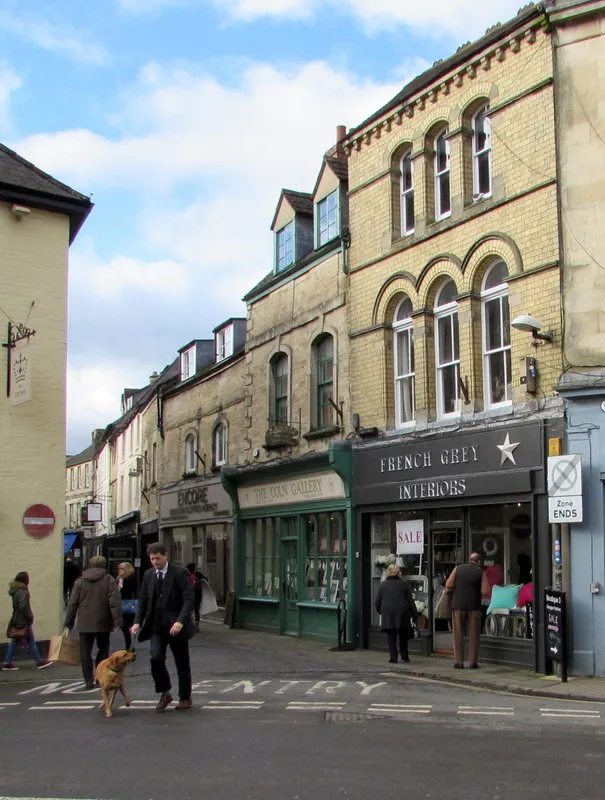
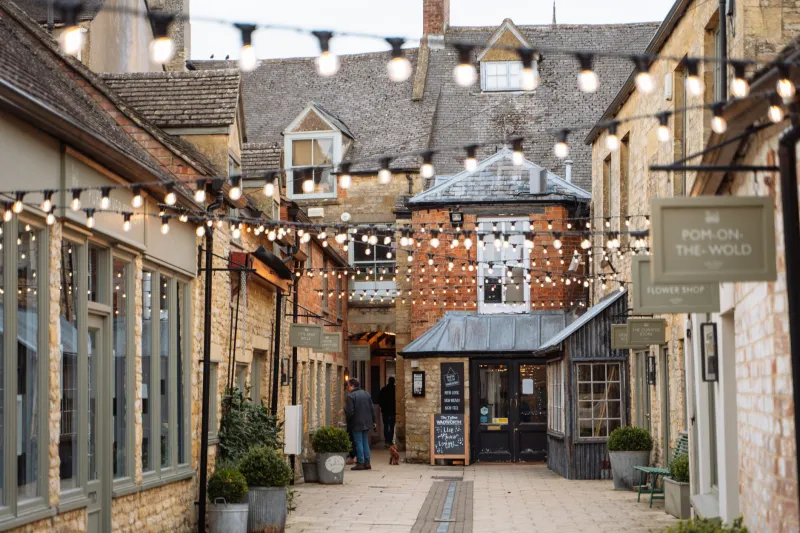
The dip at the bottom of Digbeth Street collects water and holds it. The shaded stretch of Church Street on the north side, where the buildings block the sun until nearly lunchtime, stays slick after everywhere else has softened. Well Lane and the little back passages off Sheep Street get no gritting and very little sun in December, and the north-facing yards behind the Square can be genuinely dicey for a week after a hard frost. If you're staying in a cottage down one of those lanes, this is the bit where you want to be careful at half seven in the morning with a suitcase.
Drainage matters as much as shade. The town's lowest points — the bottom of Park Street, the gutter line along Sheep Street, the corner where the Oddington road leaves the town — are always the last to clear, simply because that's where the water ends up. After a thaw-and-refreeze, that's your ice.
Where the sun lands first
Now the good news. Stow is full of sun traps, and locals guard them quietly.
The south side of the churchyard is the best of them. The wall of St Edward's takes the low winter light from about eleven and holds the heat in the stone, and the gravel path along that side is usually the best-kept surface in town when everything else is suspect. There's a bench or two along there that get occupied by the same faces most fine mornings — dog walkers, a couple of retired gents, whoever has decided the day is worth a sit.
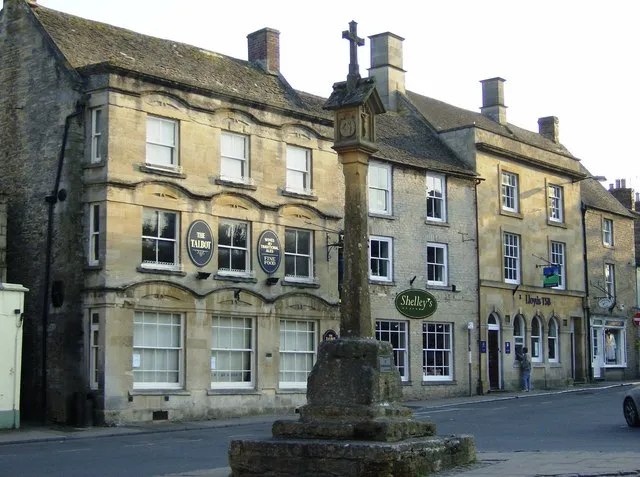
The south-facing terrace walls on Park Street do something similar, as does the wall by the war memorial, and the corner of the Square that catches the sun from mid-morning on. If you want a rule of thumb: follow the south-facing stone. It's warm to the back of the hand in January, and it's warm underfoot too, because it's been thawed and dried by two o'clock.
A note on grit
Nobody sensible expects the gritters to reach Well Lane. The county's priority is the main roads — the Fosse Way, the A436, the routes out towards Bourton and Chipping Norton — and that's the right call. Secondary roads come next, the little residential lanes after that, and the footways through the middle of town whenever there's a crew free. In practice, on a bad morning, the pavements around the Square get done and the rest is down to you.
So: there are grit bins about, and nobody minds if you help yourself to a shovel's worth on your own step. Microspikes or a decent walking shoe with actual tread will see you right; smooth-soled anything is a gamble. And if the pavements are grim, cut through the churchyard — it's the closest thing the town has to a maintained winter path.
The frost loop: an hour and a half, no heroics
This is the walk I'd suggest to anyone who wants to be out on a hard frost without ending up on their back.
Start on the Square, cross to Church Street on the sheltered side, and go through the churchyard's south gate. Follow the south wall the long way round — sun on your right, stone on your left — and come out at the western end. From there, drop down to the bottom of Well Lane, but only as far as the last house; the lane below that is steep, shaded and often iced, and there's nothing down there worth a broken wrist.
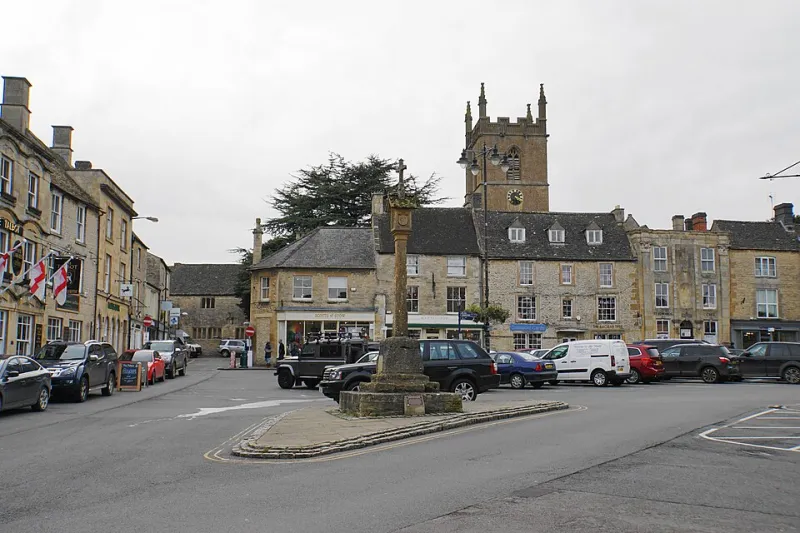
Turn back and take Park Street, keeping the south-facing walls on your left, then cut through to Digbeth and back to the Square. If the day is clear and your footing is good, add the short stretch out along the Oddington road for the view back at the town — the church tower against a low sun is worth the ten extra minutes, and the road margin there drains well.
Total distance is barely a mile and a half, most of it on decent surfaces, and it can be cut short at almost any point. Which is the point.
Finishing warm
A winter walk should end within sight of a fire. The pubs around the Square all do a decent job of it, and on a cold Saturday the choice is mostly about which one has a table free — the Porch House and the Bell both fill up early, and the smaller rooms are the ones worth waiting for.
One last thing, for anyone who thinks this is a modern complaint: Stow has been negotiating with the cold for centuries. The old sheep fairs were held in the milder months for good reason, and local memory still holds the long freeze of 1963, when the lanes out of town were reportedly blocked for weeks and people got very good at walking on the tops of the hedges. The town has always handled winter the same way — slowly, sensibly, and with somewhere warm at the end of it.