The Kerb-by-Kerb Guide: Getting Round Stow's Square with Wheels, Frames or a Bad Knee

Photo: Stow-on-the-Wold pavement kerb cobbles wheelchair access street, via www.benefitsaccountmanager.com
Let's start with the honest headline: Stow-on-the-Wold is not flat, not smooth and not step-free. It is, however, entirely workable if you know three things — where the slopes are, which kerbs drop, and which bits of pavement to avoid entirely.
What follows is the audit I'd want if I were visiting with a wheelchair, a rollator, a pushchair or a knee that's been threatening to go on strike since 2019. It's blunt in places. That's deliberate. A guide that says everywhere is fine is worse than no guide at all.
The lie of the land
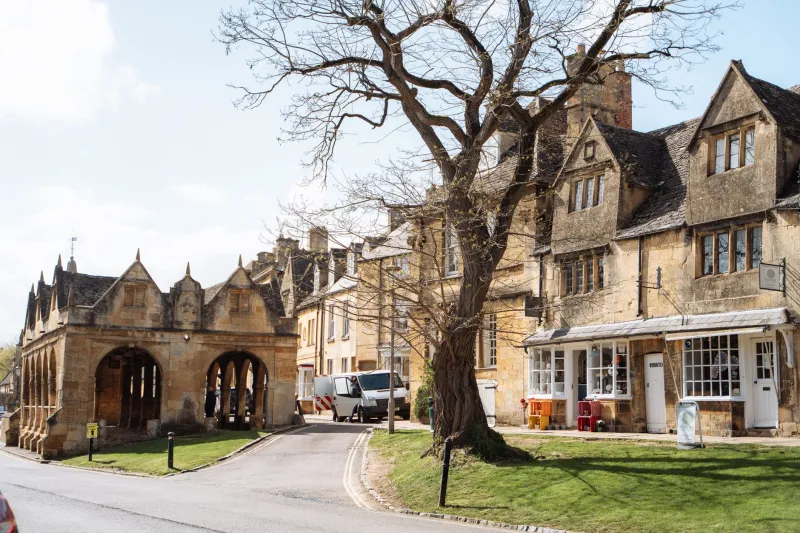
The square itself is a plateau, which is the good news. The bad news is that there are half a dozen ways up to it and every single one is a hill.
- Sheep Street, from the main car park. Long, steady, on tarmac pavement. Easily the gentlest approach.
- Digbeth Street, from the bottom. Continuous pavement, one awkward pinch where it narrows, then a short drag up to the square.
- Church Street. Steep at the bottom, then a gentler run to the church. Fine if you take it slowly; punishing if you don't.
- Park Street. Moderate, but the pavement on one side is narrow and the wall is unforgiving.
- Well Lane. Steep, narrow, no proper footway for stretches. Don't. There are prettier ways to injure yourself.
Where to park, honestly
Blue Badge bays are available in the main pay-and-display off Sheep Street, close to the exit, which is also the flattest bit of the whole car park. They fill, but rarely before nine in the morning on a weekday. If you're being dropped off rather than parking, the best spot is the short stretch outside the church on Church Street — you're level with the churchyard gate and only a hundred yards of gentle pavement from the square.
Avoid trying to stop on the square itself. It's technically possible for a minute, and the traffic behind you will make sure you regret it.
The three routes that genuinely work
Route one — car park to the Cross. Out of the Sheep Street car park, straight along the tarmac pavement, one dropped kerb at the corner by the Talbot, and you're on the square. No steps, no cobbles underfoot until the last twenty yards. This is the one to use if you're unsure.
Route two — Digbeth Street, bottom to top. Continuous pavement the whole way, with a blind corner about halfway where the pavement narrows to barely a metre. Take it slowly and hug the wall. The reward is a gentle slope up into the square with a dropped kerb at the top.
Route three — the churchyard. Up Church Street, through the lychgate, along the path to the south porch. The gate has a small threshold and the path is uneven in the way that only genuinely old paths are — roots, settled slabs, a bit of a camber. Manageable in a power chair, a slog in a manual one without a helper.
The awkward corners, named
Being specific is more useful than being polite, so:
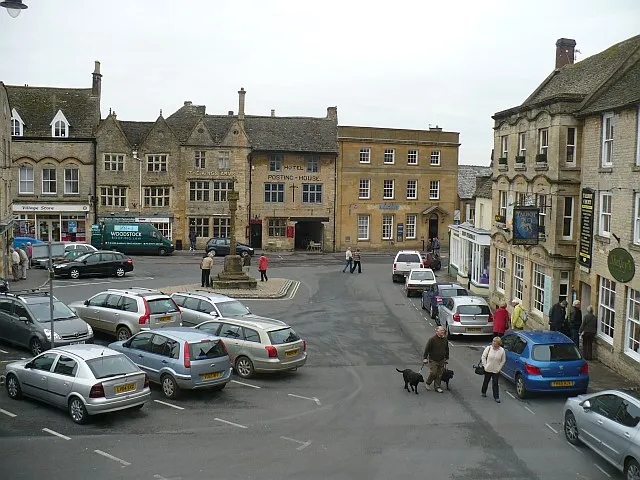
- The raised island around the Market Cross. Two of its four approaches have kerbs with no ramp. Come at it from the north side and you'll get on fine; from the south you'll be lifting wheels.
- The pavement outside the pubs on the north side of the square. Genuinely narrow. If there's a table outside in summer, there's no through route. Use the road, carefully, or cross.
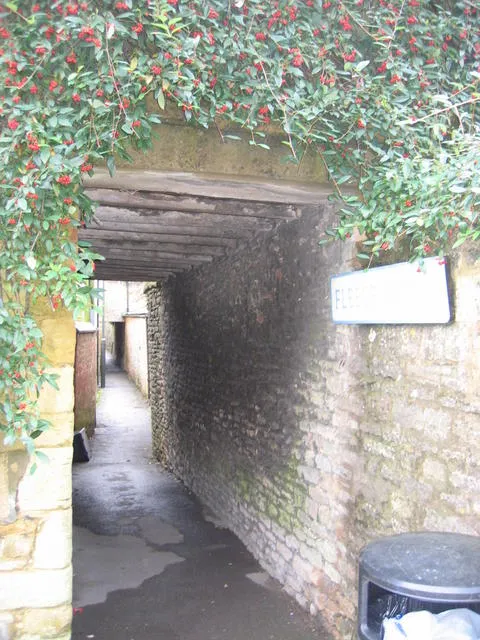
- The ginnel between the shops on Digbeth Street. Very attractive, very tempting, very much not step-free at the far end.
- The junction where Well Lane meets the square. No dropped kerb, poor sightlines, and a camber that will try to tip you into the road.
Shops, cafés and pubs
Most of the ground-floor independents along Digbeth Street and Sheep Street have a threshold step of somewhere between five and ten centimetres — enough to stop a manual wheelchair, easily bridged by a portable ramp or a member of staff. In practice, the shopkeepers here will fall over themselves to help if you catch their eye. That's not a marketing claim; it's just how a town of this size works.
For pubs, phone ahead. Most will tell you honestly which door works and which one has a step you'd rather not meet. Several have a level or near-level entrance off the street; several more have a step at the front and a side way in that nobody advertises. Ask. It takes thirty seconds and saves an argument.
Loos, and one practical note
The public conveniences in town include an accessible cubicle, but check before you rely on it — opening hours tighten out of season, and the standard RADAR lock is in use, so bring a key if you have one. As a backup, the larger cafés and pubs on the square are generally relaxed about a paying customer using theirs, and will usually say yes even if you're not.
Weather, timing and the quiet hours
Wet setts and cobbles are genuinely slippery, and the camber near the Cross sheds water straight across the pedestrian routes. If it's been raining, stick to the tarmac. Midweek mornings are the calmest window: deliveries are done by half nine, the coaches arrive later, and you'll have the square more or less to yourself.
A ninety-minute circuit that works
Park at Sheep Street. Walk the tarmac pavement to the square and come at the Cross from the north. Coffee on Digbeth Street, where the doorways are wide and the staff will move a chair without being asked twice. Back across the square, up Church Street to the churchyard for the yew door and a sit on the bench by the porch. Then down the same way — the gentlest descent in town — and back to the car.
It won't get you into every shop and it won't get you down Well Lane. But it will get you a proper feel for the place, which is more than most accessibility guides manage.