Thursday Comes First: A Local’s Almanac of Stow’s Square in 2026
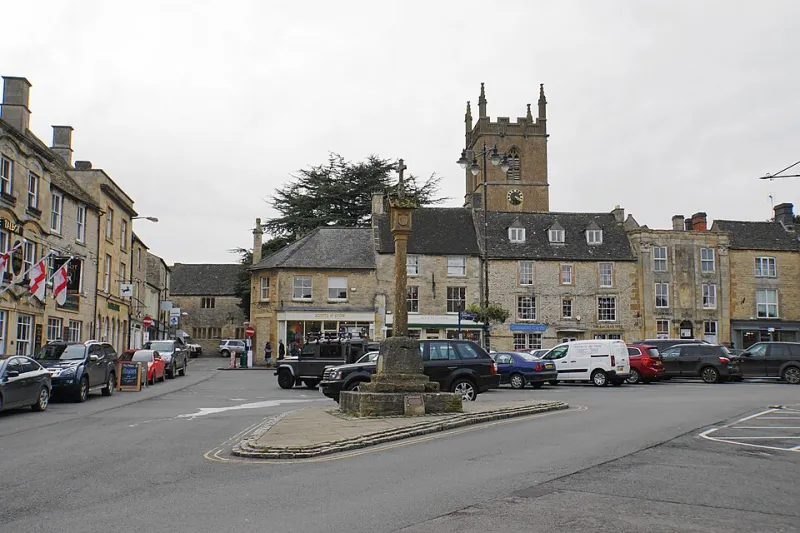
Photo: Bill Boaden , CC BY-SA 2.0, via Wikimedia Commons
Stow’s Square has more than one clock. There’s the church clock, which is reliable, and there’s market time, which is not. The charter market lands on Thursdays, but the year is punctuated by fairs, late openings and the odd Saturday when the whole town seems to have rearranged itself overnight. With 2026 now well into its final stretch, here’s the local’s crib sheet: what each month did to the Square, what to expect when it comes round again, and what’s still to come before the year is out.
The Thursday Default
If you only learn one thing about Stow’s market rhythm, learn this: Thursday is the default. The charter market sets up in the Square through the morning, and the town bends around it. Stalls tend to arrive before the cafés open, and the first serious queue is usually at the egg and cheese stall rather than the coffee machine. Locals who know what they want are in and out before 10.30; visitors who arrive at 11 are sharing the pavements with everyone else.
Parking is the tell. On market mornings the usual bays in the Square are taken by stalls, so the car parks off Maugersbury Road and Back Walls fill earlier than you’d expect for a Cotswold town on a weekday. If you’re driving in, aim to be parked by 9.15 or leave it until after 2, when the stalls are packing down and the cafés get their second wind. The Square itself feels different too: less a place to pass through, more a place to stop and natter. That’s the point.
January and February: The Quiet Gear
January is the month the market takes a breath. The first Thursday back after New Year is usually a thinner affair — fewer stalls, more space, and a noticeable lack of urgency. It’s a good time to visit if you want the Square to yourself; less good if you’re after the full set of producers. Cafés are quiet, parking is easy, and the town feels like it’s still deciding whether to commit to the year.
February brings a bit of colour back. Half-term gives the Square a family hum, and the market gets its regulars back. It’s still a month for layers and a quick loop rather than a long linger. The local butcher does a brisk trade, and the first daffodils usually turn up on a stall before they turn up in the gardens.
March and April: The Square Wakes Up
March is when the market starts to feel like itself again. The light is longer, the stalls are fuller, and the plant man becomes the person everyone wants to talk to. It’s a good month for a slow Thursday: market first, then a walk down to the church and back up through the lanes.
April is Easter, and Easter changes the tempo. The Square gets busy over the bank holiday weekend, and the bakery does a hot cross bun queue that spills onto the pavement. If you’re visiting, come early or come late; the middle of the day is a shuffle. Parking is a scrum by 10, and the cafés are full by 11. The market itself is still Thursday, but the surrounding days feel like market days too.
May: The First Horse Fair
May is the month that properly rearranges Stow. The first of the year’s horse fairs usually lands mid-month, and it is not a normal market day. Horses, traders, caravans and visitors fill the Square and the approaches; the town is loud, alive and completely itself. Locals either lean into it or plan a day elsewhere. If you’re coming, leave the car at home if you can — the bus is the sane option — and give the horses room. This is a working fair, not a petting zoo.
On ordinary Thursdays in May, the market is at its best: long tables, proper produce, and a buzz that hasn’t yet been worn down by summer crowds.
June, July and August: Peak Square
June is the sweet spot. The market is full, the café tables are out, and the Square feels like a place to sit rather than a place to hurry through. It’s also the month when locals start doing their shopping earlier to avoid the coach parties.
July and August are peak season. The charter market still runs on Thursdays, but the Square is busy every day, and market day itself can feel like a festival with added rucksacks. The practical advice is boring but true: come before 10, do your browsing then, and save the cafés for after the midday rush. If you’re a local, you already know which till to join.
September and October: The Good Bit
September is the connoisseur’s market month. The crowds thin, the stalls relax, and the produce is at its best. It’s the month when you can still get a table outside and the Square hasn’t yet turned its mind to Christmas.
October brings the second horse fair, usually late in the month, and the same rules apply: expect the town to be full, expect the roads to be slow, and expect a proper spectacle. Between the fairs, the market settles back into its Thursday rhythm, and the first Christmas stock starts appearing in the independent shops — a quiet warning of what’s coming.
November and December: What’s Left in 2026
We’re here now, halfway through November, and the Square is in its run-up-to-Christmas mode. The lights switch-on and late-night shopping usually land towards the end of the month; check the noticeboard by the library or the town council’s pages for the exact dates, because they do shift. The charter market continues on Thursdays, and the stalls gradually acquire a festive leaning — wreaths, hampers, the good cheese.
December is the busiest month for the Square’s social calendar. The Christmas market and late-opening evenings pull in locals and visitors alike, and the last Thursday before Christmas is chaos in the best way. Come early for parking, bring a bag, and don’t expect a quiet coffee. If you want the calm version, aim for a weekday morning in the first week of December, before the schools break up.
The Local’s Rule of Thumb
The Square rewards people who arrive early and leave room for a second lap. Market day isn’t a tick-box; it’s the town’s weekly pulse. Check the dates, mind the parking, and if you see a queue at a stall, join it — it’s usually there for a reason.